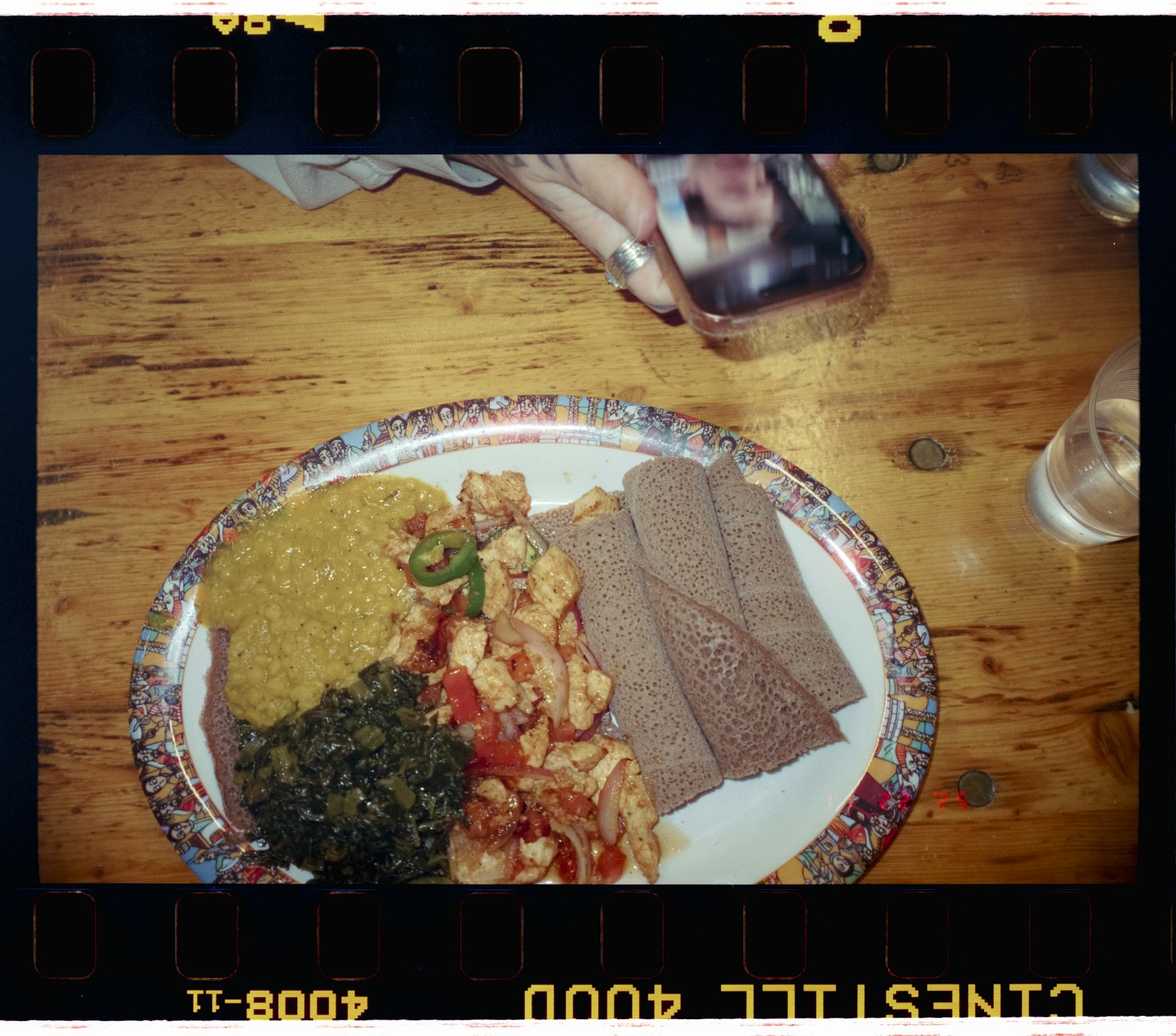
Ethiopian food is shared, eaten by hand and built around injera, a soft, slightly sour flatbread made from teff. It is served as a large round, with stews and other dishes placed on top.
What you will find on the plate
- Wat (or wot): a slow-cooked stew, often spiced with berbere. Versions include chicken, beef, lentils and split peas.
- Tibs: pieces of meat sautéed with onions, peppers and spices.
- Kitfo: finely chopped beef, traditionally served raw or lightly warmed with spiced butter. Ask for it cooked to your taste.
- Shiro: a smooth, spiced chickpea or broad-bean stew, and a staple of fasting days.
- Gomen: collard greens, often served beside the stews.
Fasting days and vegetarian food
Many Orthodox Christians eat no animal products on Wednesdays and Fridays and during longer fasting periods. As a result, vegetarian and vegan dishes are easy to find, and often excellent.
How to eat
Tear off a piece of injera with your right hand, use it to pick up some food, and eat it in one bite. If you are sharing, it is a kind gesture to feed a bite to a companion (a gursha).
The coffee ceremony
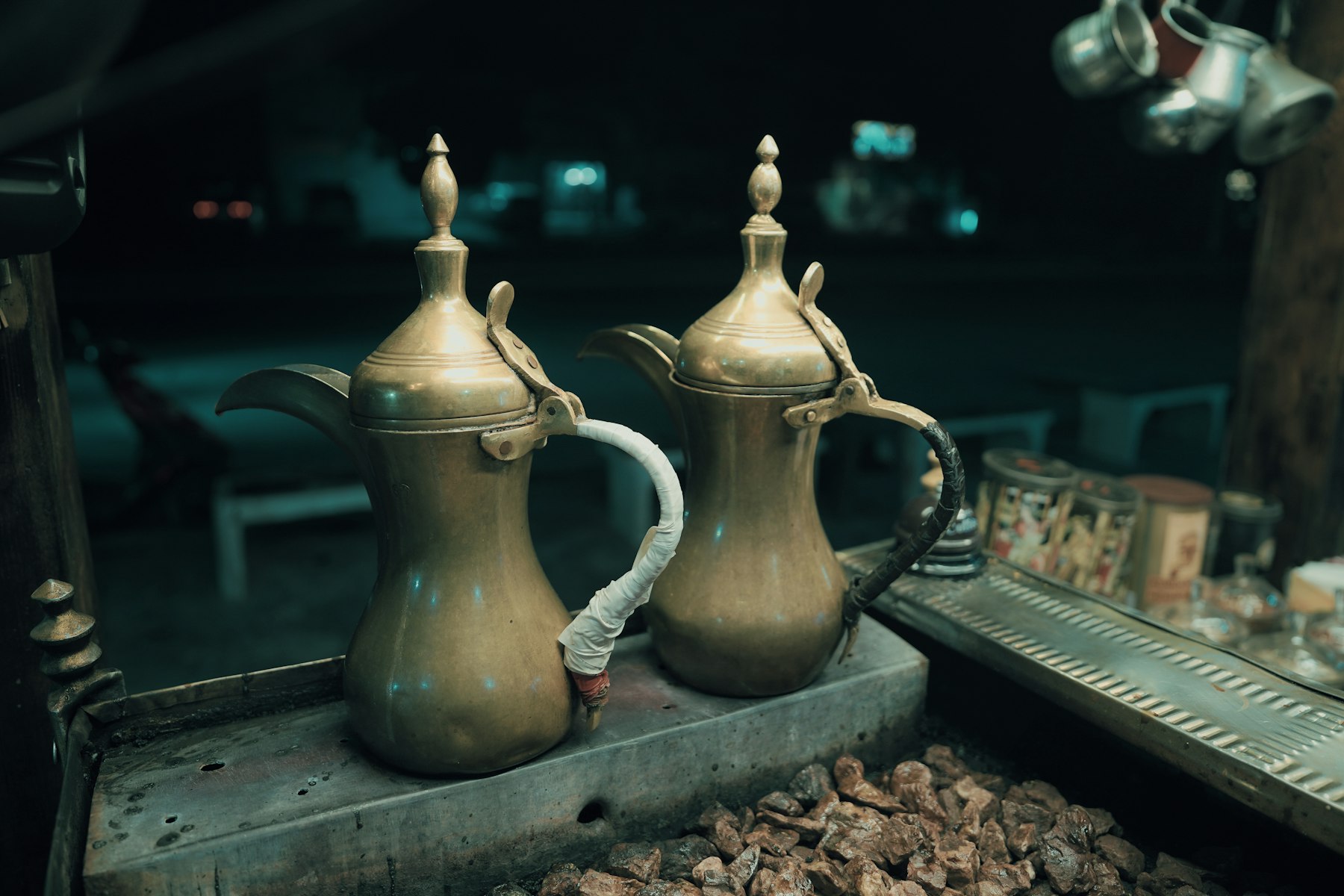
Ethiopia is often described as the birthplace of coffee, and the coffee ceremony is a central social ritual.
- Green beans are washed and roasted over charcoal, and the smoke is wafted towards guests.
- The beans are ground and brewed in a clay pot (jebena).
- Coffee is served in three rounds, called abol, tona and baraka. It is polite to stay for all three.
It is usually accompanied by popcorn or small snacks, and by incense. A ceremony can take an hour or more, so treat it as an invitation to sit down and chat.
Drinks
- Tej: a honey wine, sweet and strong.
- Tella: a home-brewed beer.
- Fresh juices, made from layered fruits such as avocado, papaya and mango.