
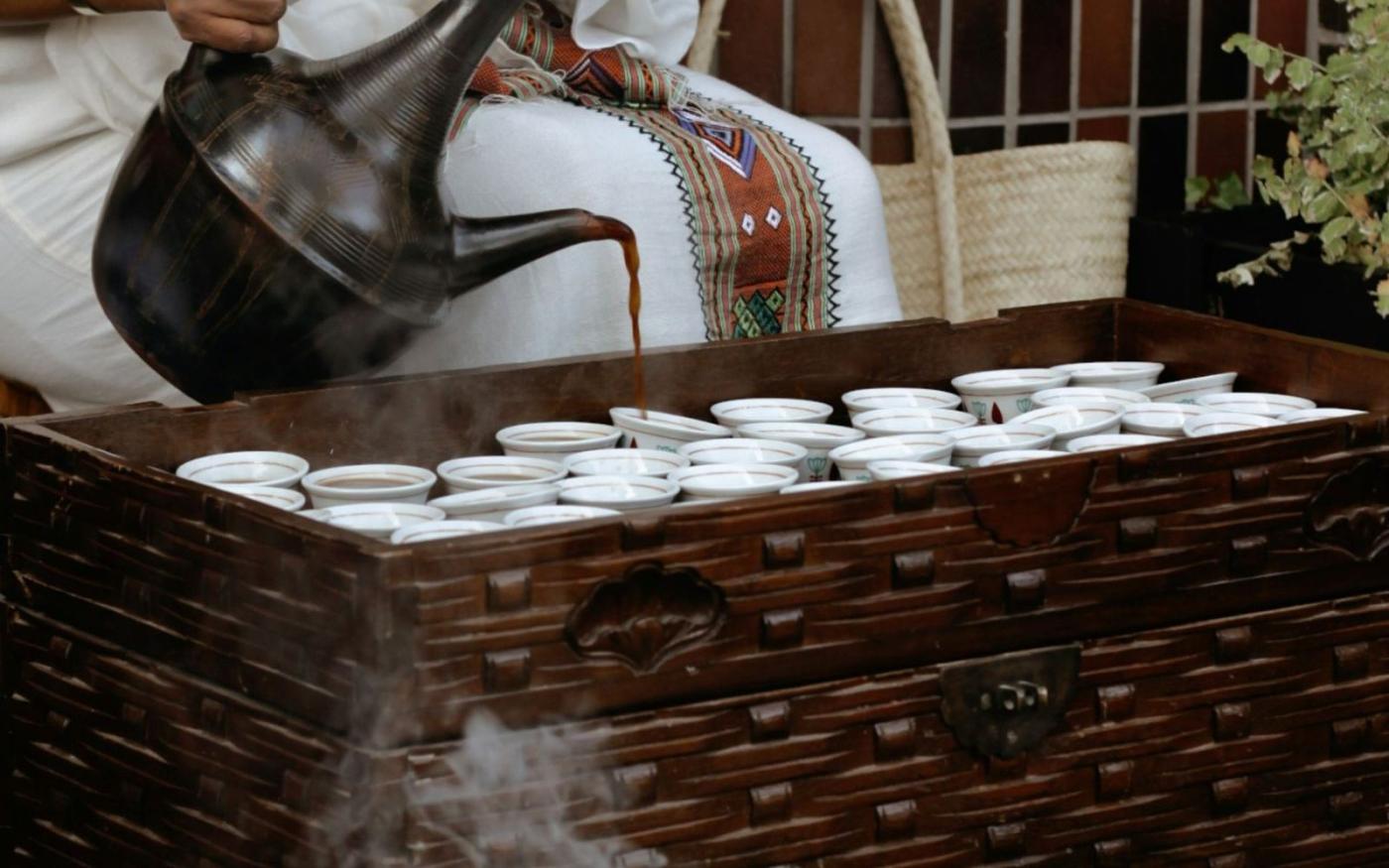
If you spend more than a day in Ethiopia, someone will invite you to coffee. Accept. A buna ceremony is not a quick drink but a ritual of hospitality that can last an hour or more, and it is one of the best ways to understand everyday Ethiopian life.
Ethiopia is where coffee comes from. Wild Arabica still grows in the forests of the southwest, in the old kingdom of Kaffa, and legend credits a goatherd named Kaldi with noticing how lively his goats became after eating the red berries. Today coffee is part of daily life in homes, offices and roadside stalls across the country.
What happens at a ceremony
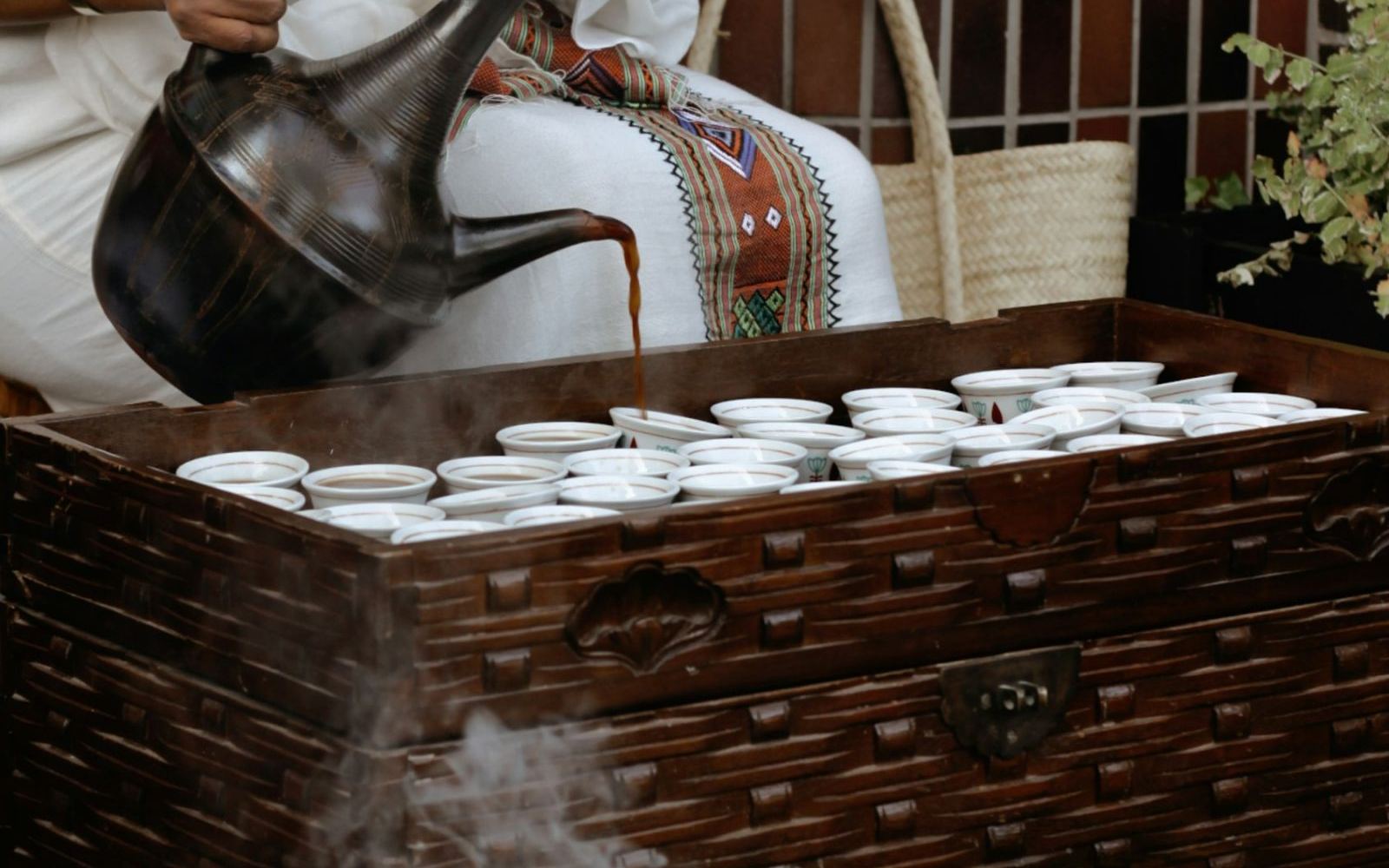
- The setting. Fresh grass or flowers are scattered on the floor, and frankincense is lit on a small burner. Its smoke fills the room for the whole ceremony.
- The roast. The host, traditionally a woman of the house, washes green coffee beans and roasts them in a flat pan over charcoal. When they crackle and turn glossy, she walks the pan around so every guest can breathe in the smoke.
- The grind. The beans are pounded by hand in a wooden mortar called a mukecha.
- The brew. The coffee is boiled in a jebena, a round clay pot with a long neck, then left to settle before it is poured from a height into small handleless cups, without spilling a drop.
Three rounds
Coffee is served three times from the same grounds, each round a little lighter than the last:
- Abol, the first and strongest round;
- Tona, the second;
- Baraka, the third, whose name means blessing.
It is polite to stay for all three. Leaving after the first cup can seem abrupt.
Coffee is served with sugar, sometimes salt, sometimes a sprig of rue, and nearly always with a bowl of popcorn.
How to be a good guest
- Take the cup with your right hand, or with both hands.
- Compliment the coffee. The host has spent the best part of an hour on it.
- Ask questions. Coffee is when conversation happens, and families love to talk about their region, their saints’ days and their children.
- If you are offered a third cup, take it. You are being blessed.
Where to experience it
Many cafés in Addis Ababa perform a simplified ceremony every afternoon, and some hotels offer one in the lobby. The real thing, though, is in someone’s home. On our trips we arrange coffee with local families, and in the coffee regions of Sidama and Jimma you can follow the drink all the way from the farm to the cup.



Comments
No comments yet. Questions about this trip are welcome too.