
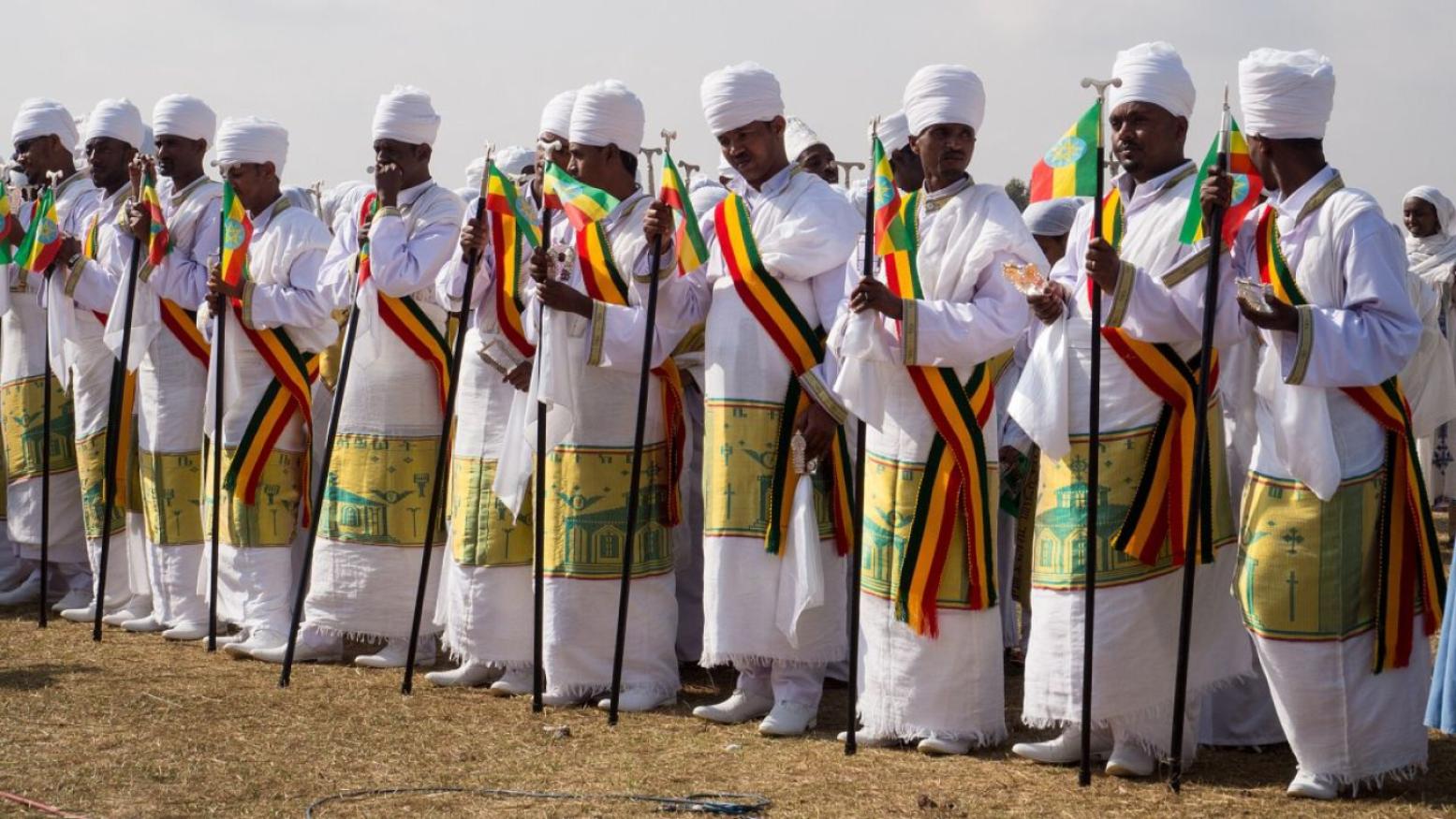
For three days every January, Ethiopia’s Orthodox Christians celebrate Timkat, the Epiphany, which commemorates the baptism of Jesus in the river Jordan. It is the most colourful festival in the country, and in 2019 UNESCO inscribed it on its list of the intangible cultural heritage of humanity.
The tabots
Every Ethiopian Orthodox church holds a tabot, a consecrated replica of the tablets of the Ten Commandments. It is kept in the inner sanctuary, seen only by priests, and wrapped in rich cloth whenever it leaves the church. At Timkat, the tabots leave their churches and are carried in procession to a body of water.
How the three days unfold
- Ketera, 18 January. In the afternoon each church’s tabot is carried on a priest’s head, under embroidered umbrellas, to a pool, river or tent camp. Thousands follow, singing, drumming and dancing. Priests and faithful keep vigil through the night.
- Timkat, 19 January. Before dawn comes mass, then the water is blessed and sprinkled over the crowd, and some people jump in. Later the tabots begin their return journey to their churches.
- The feast of St Michael, 20 January. The last tabots return home, with more processions in many towns.
In years before a Gregorian leap year the dates move by one day.
Where to see it
Gondar
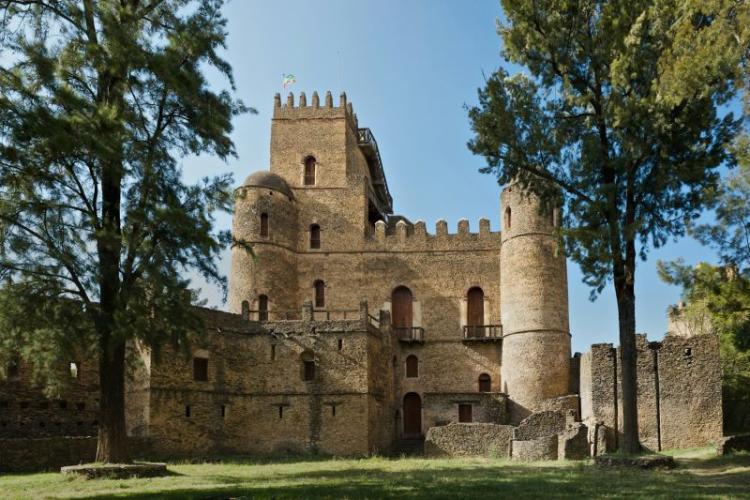
The most famous celebration takes place at Fasilides’ Bath, a 17th-century pool with a small castle in its centre. It is filled with water for the festival, and at the blessing the crowd jumps in. Expect huge crowds and an electric atmosphere.
Lalibela
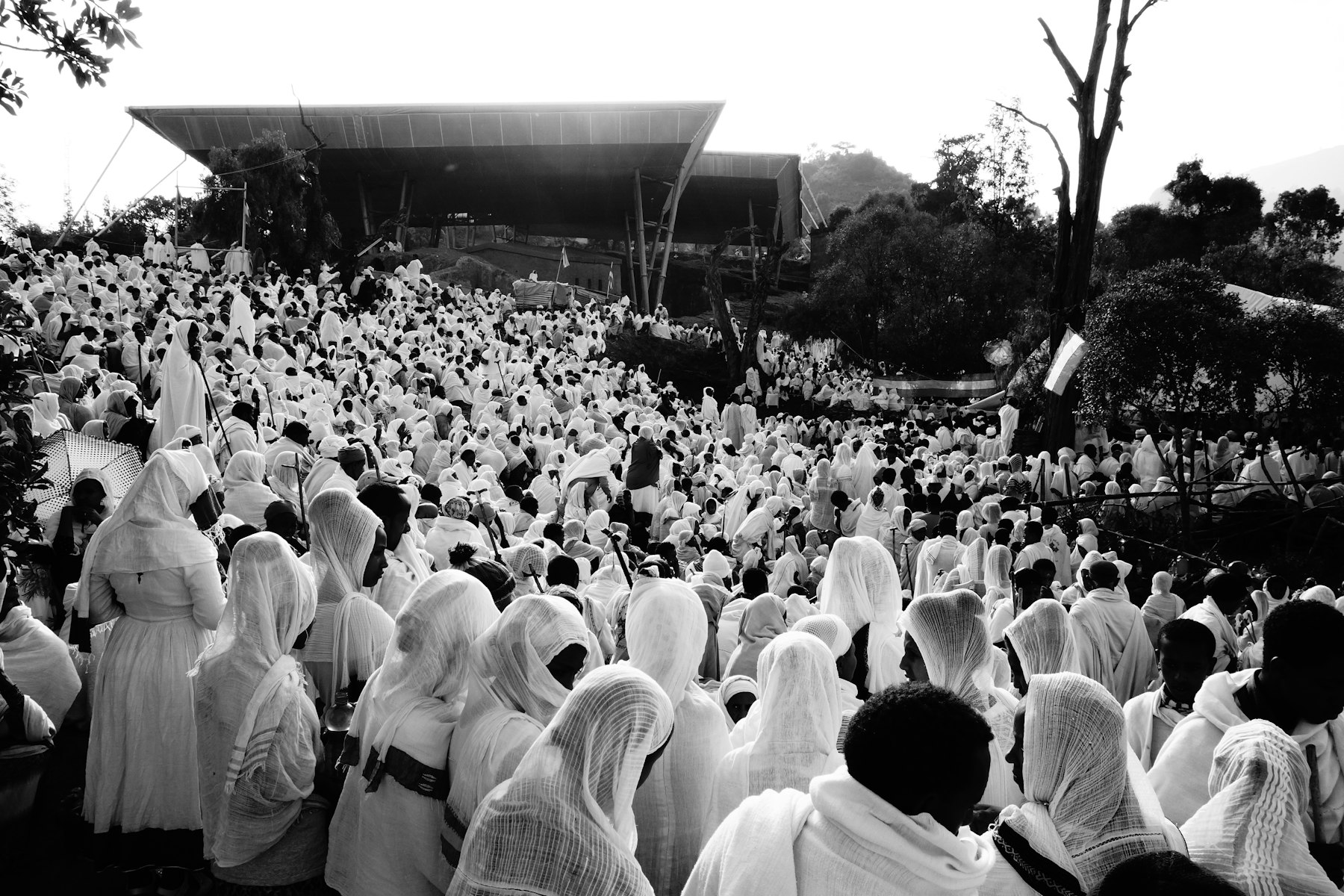
Smaller and more devotional, with processions winding between the rock-hewn churches. Many visitors combine Genna in Lalibela on 7 January with Timkat two weeks later.
Addis Ababa
Processions converge on Jan Meda, a large field in the north of the city. It is a good choice if you only have a few days.
Find a place near the route on the afternoon of the 18th. The procession is the heart of Timkat, and you see far more there than at the crowded water’s edge.
Tips for visitors
- Book early. Hotels in Gondar and Lalibela fill up for January, sometimes a year ahead.
- Dress modestly, ideally in white, as most Ethiopians do. A netela, the light white shawl, makes a lovely souvenir.
- Keep your belongings close in the crowds and agree a meeting point with your group.
- Ask before photographing priests and worshippers, and never step in front of a tabot.

Comments
No comments yet. Questions about this trip are welcome too.