
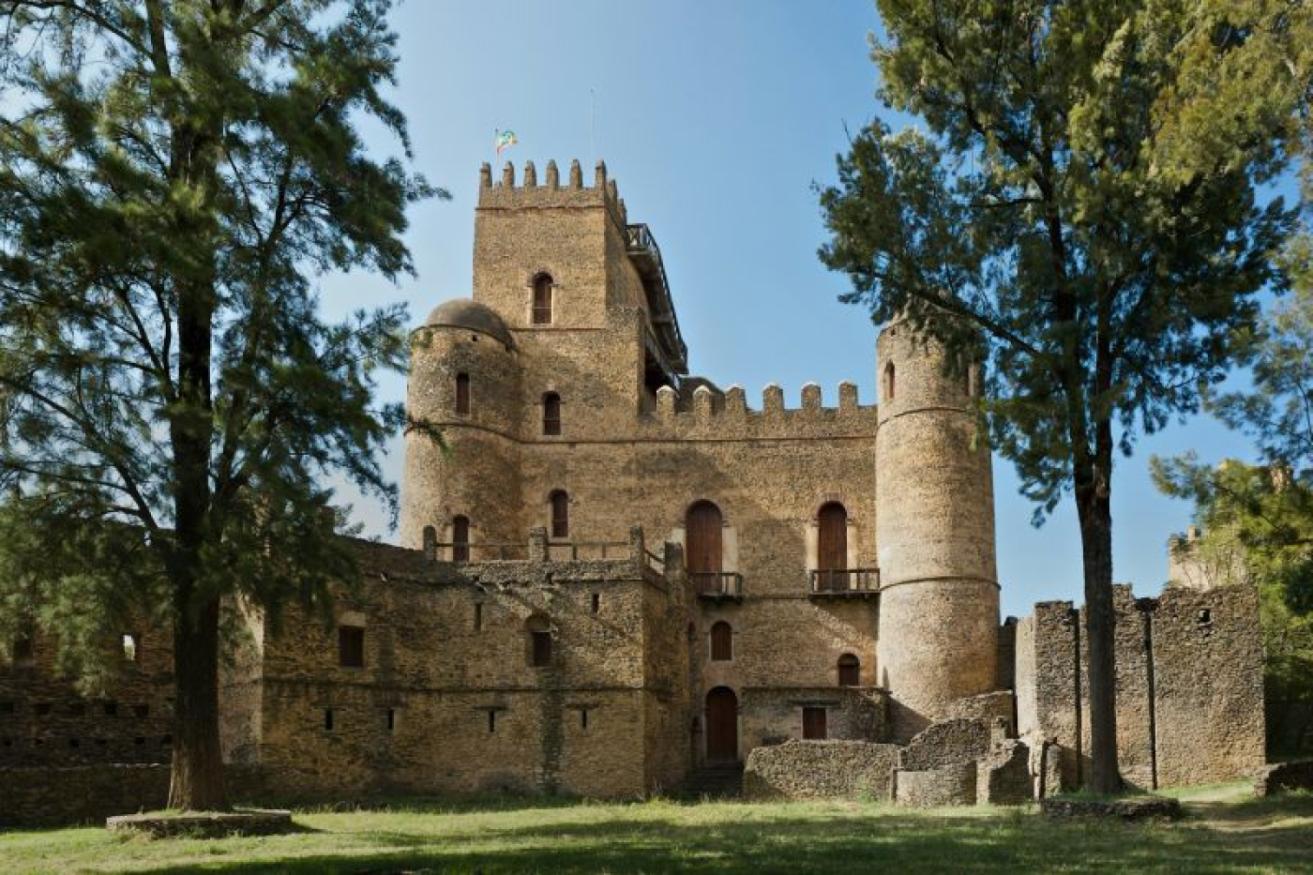
In the 1630s, Emperor Fasilides settled the Ethiopian court at Gondar, north of Lake Tana, ending centuries of roving royal camps. For the next two hundred years Gondar was the capital of the empire, and its rulers built a walled royal enclosure, the Fasil Ghebbi, filled with castles, palaces, libraries and banqueting halls. UNESCO listed it as a World Heritage Site in 1979.
The royal enclosure
Allow at least two hours. The highlights are:
- The castle of Fasilides, the oldest and grandest, with its battlements and corner towers. Climb to the top for a view across the city.
- The palace of Iyasu I, once decorated with ivory, gold leaf and mirrors.
- The library and chancellery of Yohannes I, and the remains of the lion cages where the emperors kept Abyssinian lions.
Fasilides’ Bath
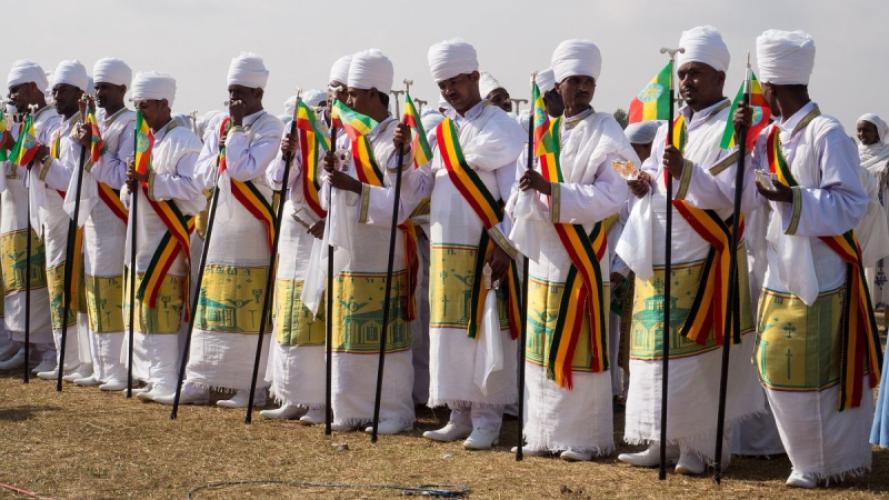
A short drive from the centre, a small two-storey castle stands in the middle of a large stone pool, surrounded by fig trees whose roots wrap around the walls. For most of the year the pool is empty. At Timkat, in January, it is filled with water, blessed, and thousands of people jump in.
Debre Berhan Selassie
Gondar’s most famous church is a simple stone building on a hill, but inside, every wall is painted with saints and biblical scenes, and the ceiling is covered with rows of winged angels’ faces, all gazing down at you. Go in the afternoon, when the light is soft.
Look up as you enter Debre Berhan Selassie, then find the one angel who isn’t looking at you. The priests will be happy to help.
Planning your visit
- Gondar has an airport with flights from Addis Ababa, and is about three hours by road from Bahir Dar.
- It is the gateway to the Simien Mountains, so most visitors combine the two.
- One full day is enough for the main sites; two let you add the village of Wolleka and a relaxed evening of food and music.

Comments
No comments yet. Questions about this trip are welcome too.