
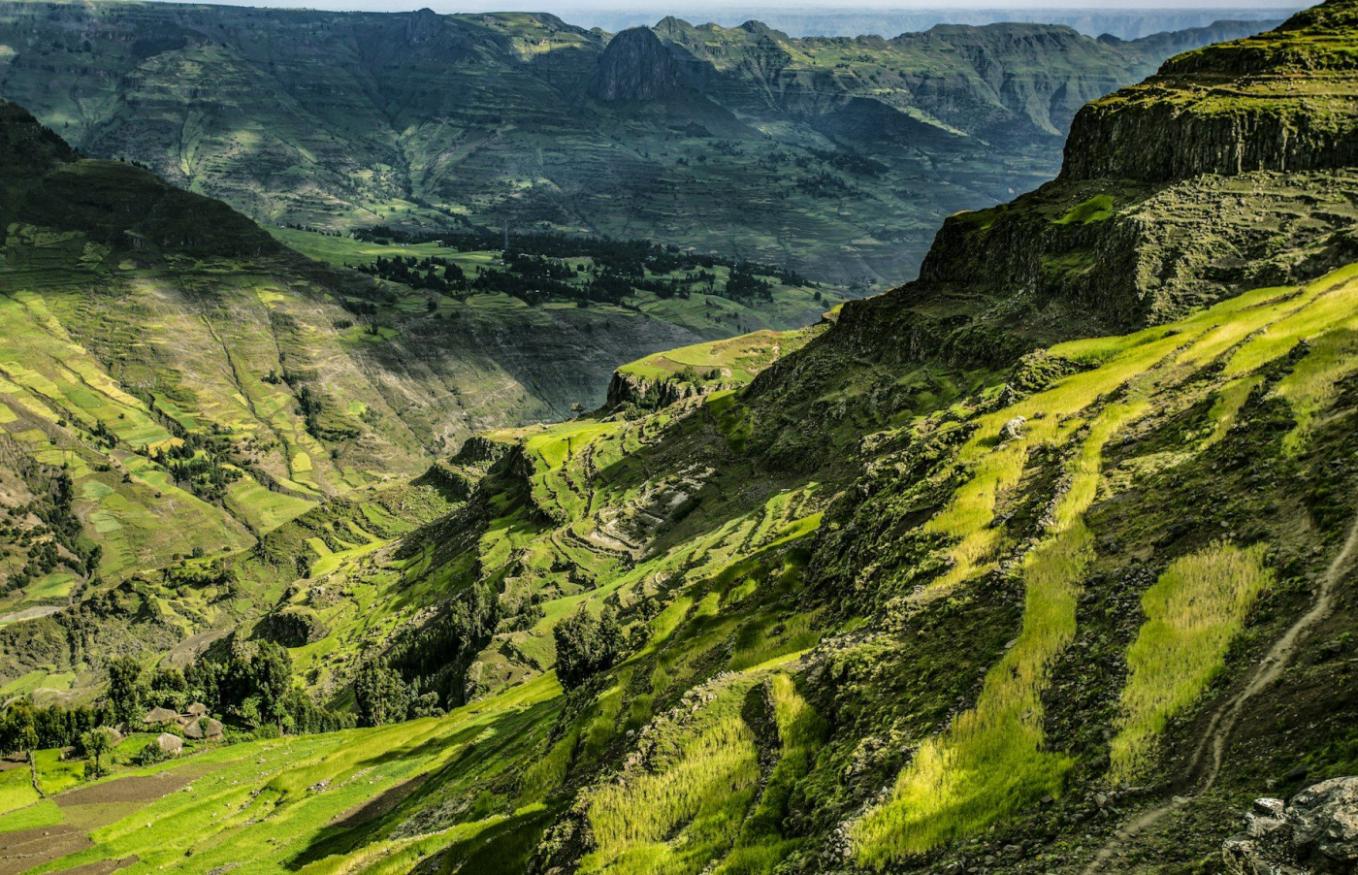
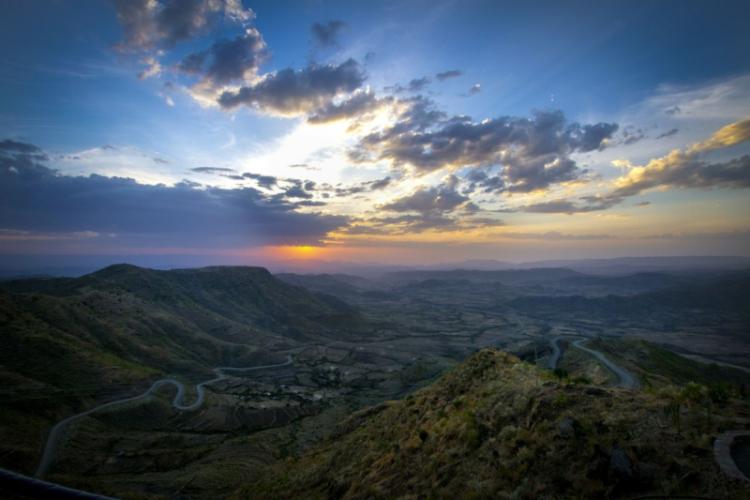
The Simien Mountains are one of Africa’s great trekking destinations, and still surprisingly quiet. A high plateau, mostly between 3,000 and 4,000 metres, ends abruptly in escarpments that drop more than a kilometre to the lowlands below. Walk along the edge in the early morning and you will share the path with troops of gelada monkeys grazing on the grass, while lammergeiers ride the thermals beneath your feet.
The national park was among the first places UNESCO listed as a World Heritage Site, in 1978, for its landscapes and its endemic wildlife. It is also home to Ras Dashen, Ethiopia’s highest peak at around 4,550 metres.
How a trek works
Every trek starts in Debark, about two hours’ drive north of Gondar, where the park headquarters issues permits. Every group walks with an armed park scout, which is a park requirement rather than a sign of danger, and usually with a local guide, a cook and mules to carry the camping gear.
Choosing a route
- Two to three days: drive to Sankaber, then walk the escarpment to Geech camp, with a side trip to the Jinbar waterfall. A superb introduction.
- Four to five days: continue from Geech to Imet Gogo, one of the finest viewpoints in Africa, then on to Chenek. Chenek is the best place in the park to see the Walia ibex, found nowhere else on earth.
- Seven days or more: add the ascent of Ras Dashen from Ambiko, a long, hard day above 4,000 metres for experienced trekkers.
Wildlife you can expect
- Gelada monkeys, sometimes called bleeding-heart baboons, in groups of several hundred. They are relaxed around walkers and endlessly entertaining.
- Walia ibex, an endangered mountain goat found only in the Simien.
- Lammergeiers, or bearded vultures, and thick-billed ravens.
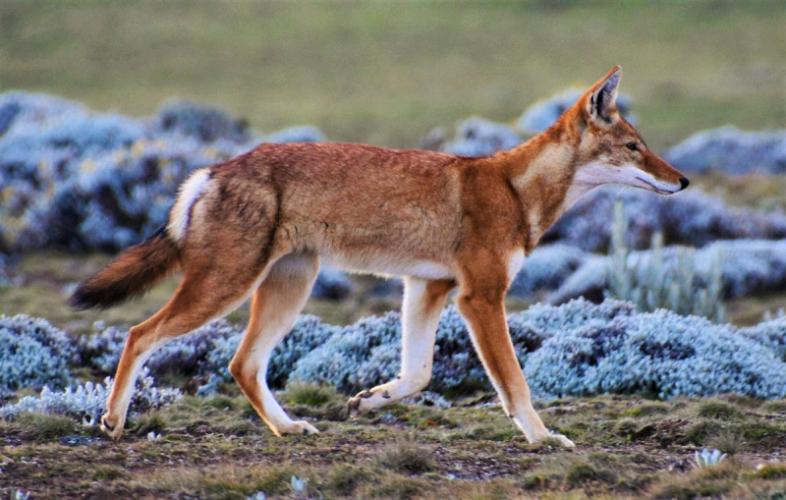
- With luck, an Ethiopian wolf on the higher slopes.
Altitude and preparation
Most camps sit between 3,200 and 3,700 metres. The walking is rarely technical, but the altitude makes everything harder. Spend a night or two in Gondar or Addis first, walk slowly, drink plenty of water, and tell your guide at once if you get a persistent headache.
Nights are cold, often below freezing in the dry season. Bring a warm sleeping bag, a down jacket, a hat and gloves, alongside sun protection for the days.
Walk the last hour to Imet Gogo in silence. The ground simply stops, and all of northern Ethiopia lies below you.
When to go
October to February brings the clearest views and dry trails. September is wonderfully green, with wildflowers after the rains. July and August are wet and misty, though still walkable for the determined.


Comments
No comments yet. Questions about this trip are welcome too.